www.inglesparaconcursos.blog.br
❑ PROVA DE LÍNGUA INGLESA:
- COSEAC-2016-PMN/RJ-FUNDAÇÃO PÚBLICA MUNICIPAL DE EDUCAÇÃO DE NITERÓI-RJ-PROFESSOR.

https://portal.coseac.uff.br
❑ ESTRUTURA-PROVA:
- 18 MCQs (Multiple Choice Questions) / 5 Options Each Question.
- Texto (1) – | planetpdf.com |
- Texto (2) – | Multicultural Education in Your Classroom | teachhub.com |
- Texto (3) – | Why teach reading? | http://mozva.blogspot.com.br |
- Texto (4) – | Approaches and Methods in Language Teaching | RICHARDS, J; ROGERS, T; SWAN, M. |
- Texto (5) – | Simple Steps to Improve Your English Reading Comprehension | fluentu.com |
❑ PROVA:


❑ TEXTO 1:
"John Reed was a schoolboy of fourteen years old;
four years older than I, for I was but ten: large and
stout for his age, with a dingy and unwholesome
skin; thick lineaments in a spacious visage, heavy
limbs and large extremities.
John Reed era um aluno de catorze anos; quatro anos mais velho do que eu, pois eu tinha apenas dez: grande e corpulento para a sua idade, com uma pele suja e pouco saudável; linhas grossas num rosto espaçoso, membros pesados e extremidades grandes.
- "SCHOOLBOY" - aluno, estudante.
- "STOUT" [with a quite large, solid body; used of men and women] - robusto, forte, corpulento.

- "DINGY" [dark, dirty, and in bad condition] - sombrio, sujo, escuro, encardido, desbotado

- "UNWHOLESOME" /ˌʌnˈhəʊlsəm/ [harmful to health; not looking healthy] - não saudável, doentio, prejudicial, não parece saudável.

thick lineaments in a spacious visage, heavy limbs and large extremities.
lineamentos grossos num rosto espaçoso, membros pesados e extremidades grandes.
- "LINEAMENT" /'lɪn.i.ə.mənt/ [a typical feature or quality, distinctive feature or characteristic, especially of the face] - lineamento.
He gorged himself
habitually at table, which made him bilious, and
gave him a dim and bleared eye and flabby cheeks.
Alimentava-se habitualmente à mesa, o que o tornava bilioso e lhe dava um olhar turvo e descolorido e bochechas flácidas.
He ought now to have been at school; but his mama had taken him home for a month or two, 'on account of his delicate health.' Mr. Miles, the master, affirmed that he would do very well if he had fewer cakes and sweetmeats sent him from home; but the mother's heart turned from an opinion so harsh, and inclined rather to the more refined idea that John's sallowness was owing to over-application and, perhaps, to pining after home.
Já devia estar na escola, mas a mãe tinha-o levado para casa durante um mês ou dois, "por causa da sua saúde delicada". O Sr. Miles, o mestre, afirmava que ele se sairia muito bem se lhe mandassem menos bolos e doces de casa; mas o coração da mãe desviava-se de uma opinião tão dura e inclinava-se mais para a ideia mais refinada de que a falta de cor do João se devia a um excesso de aplicação e, talvez, a uma saudade de casa.
John had not much affection for his mother and sisters, and an antipathy to me.
O João não tinha muito afeto pela mãe e pelas irmãs, e tinha uma antipatia por mim.
He bullied and punished me; not two or three times in the week, nor once or twice in the day, but continually: every nerve I had feared him, and every morsel of flesh in my bones shrank when he came near.
Não duas ou três vezes por semana, nem uma ou duas vezes por dia, mas continuamente: todos os nervos que eu tinha o temiam e todos os pedaços de carne dos meus ossos se encolhiam quando ele se aproximava.
There were moments when I was bewildered by the terror he inspired, because I had no appeal whatever against either his menaces or his inflictions; the servants did not like to offend their young master by taking my part against him, and Mrs. Reed was blind and deaf on the subject: she never saw him strike or heard him abuse me, though he did both now and then in her very presence, more frequently, however, behind her back."
Alimentava-se habitualmente à mesa, o que o tornava bilioso e lhe dava um olhar turvo e descolorido e bochechas flácidas.
He ought now to have been at school; but his mama had taken him home for a month or two, 'on account of his delicate health.' Mr. Miles, the master, affirmed that he would do very well if he had fewer cakes and sweetmeats sent him from home; but the mother's heart turned from an opinion so harsh, and inclined rather to the more refined idea that John's sallowness was owing to over-application and, perhaps, to pining after home.
Já devia estar na escola, mas a mãe tinha-o levado para casa durante um mês ou dois, "por causa da sua saúde delicada". O Sr. Miles, o mestre, afirmava que ele se sairia muito bem se lhe mandassem menos bolos e doces de casa; mas o coração da mãe desviava-se de uma opinião tão dura e inclinava-se mais para a ideia mais refinada de que a falta de cor do João se devia a um excesso de aplicação e, talvez, a uma saudade de casa.
John had not much affection for his mother and sisters, and an antipathy to me.
O João não tinha muito afeto pela mãe e pelas irmãs, e tinha uma antipatia por mim.
He bullied and punished me; not two or three times in the week, nor once or twice in the day, but continually: every nerve I had feared him, and every morsel of flesh in my bones shrank when he came near.
Não duas ou três vezes por semana, nem uma ou duas vezes por dia, mas continuamente: todos os nervos que eu tinha o temiam e todos os pedaços de carne dos meus ossos se encolhiam quando ele se aproximava.
There were moments when I was bewildered by the terror he inspired, because I had no appeal whatever against either his menaces or his inflictions; the servants did not like to offend their young master by taking my part against him, and Mrs. Reed was blind and deaf on the subject: she never saw him strike or heard him abuse me, though he did both now and then in her very presence, more frequently, however, behind her back."
Havia momentos em que eu ficava desnorteada com o terror que ele inspirava, porque não tinha qualquer recurso contra as suas ameaças ou os seus golpes; os criados não gostavam de ofender o seu jovem patrão tomando a minha parte contra ele, e a Sra. Reed era cega e surda sobre o assunto: ela nunca o viu bater nem o ouviu abusar de mim, embora ele o fizesse de vez em quando na sua própria presença, mais frequentemente, porém, nas suas costas."
03 – (COSEAC-2016-PMN/RJ-PROFESSOR)
(Extract from http://www.planetpdf.com/planetpdf/pdfs/free_ebooks/jane_eyre_nt.pdf
Accessed on 20 April 2016.)
The expression "on account of" has similar
meaning to the underlined expression in:
(A) The kids had to work, regardless of their
ages.
(B) He decided to go, unmindful of the traffic.
(C) There is no class because of the bad weather.
(D) He did that at the drop of the hat.
(E) The lawyer sued Bob on behalf of her client.
(B) He decided to go, unmindful of the traffic.
(C) There is no class because of the bad weather.
(D) He did that at the drop of the hat.
(E) The lawyer sued Bob on behalf of her client.
👍 Comentários e Gabarito C
TÓPICO - Idiom :
* ON ACCOUNT OF SOMETHING (= because of, for the sake of) — POR CAUSA DE ALGO (especially a problem or difficulty).
- She retired early on account of ill health. — Ela se aposentou cedo por causa de problemas de saúde. [Oxford Dictionary]
- He doesn't drink alcohol on account of his poor health. — Ele não toma bebida alcoólica por causa de sua saúde debilitada. [Cambridge Dictionary]
- She was told to wear flat shoes, on account of her back problem. — Disseram-lhe para usar sapatos baixos, por causa de seu problema nas costas. [Longman Dictionary]
- Games are often canceled on account of rain. — Muitas vezes os jogos são cancelados por causa da chuva. [Longman Dictionary]
- NO TEXTO:
- He ought now to have been at school; but his mama had taken him home for a month or two, 'on account of his delicate health.'.
- Ele agora deveria estar na escola; mas sua mãe o levou para casa por um mês ou dois, 'por causa de sua saúde delicada'.
- A expressão idiomática "ON ACCOUNT OF , tem significado semelhante à "BECAUSE OF".
- Sendo assim, a alternativa (C) é a correta.
- RESOLUÇÃO RÁPIDA CONTEXTUAL:
The expression "on account of" has similar meaning to the underlined expression in:
(A expressão "on account of" tem significado semelhante à expressão sublinhada em:)
(A) The kids had to work, regardless of their ages.
(s crianças tinham que trabalhar, INDEPENDENTEMENTE DE suas idades)
(B) He decided to go, unmindful of the traffic.
(Ele decidiu ir, SEM SE IMPORTAR COM o tráfego.)
(Não há aula POR CAUSA do mau tempo.)
(Ele fez isso sem planejar.)
(A advogada processou Bob EM NOME DO cliente dela.)
04 – (COSEAC-2016-PMN/RJ-PROFESSOR)
In the fragment, "He gorged himself habitually
at table, which made him bilious, and gave him a
dim and bleared eye and flabby cheeks…", the
underlined term can be best replaced by:
(A) amicable.
(B) foiled.
(C) joyful.
(D) sickly.
(E) passionate.
(B) foiled.
(C) joyful.
(D) sickly.
(E) passionate.
👍 Comentários e Gabarito D
TÓPICO - IDEIA CONTEXTUAL ou INFORMAÇÃO DENTRO DO TEXTO :
- DICAS IMPORTANTES (BILIOUS COM 3 SIGNIFICADOS):
* BILIOUS (1) — BILIOSO, NO SENTIDO DE DOENTIO, SUSCETÍVEL À NÁUSEAS, INDISPOSTO, PREDISPOSTO A VÔMITOS. Sinônimo de SICKLY, NAUSEATED, QUEASY, OUT OF SORTS, LIVERISH.
- I felt a little bilious after last night’s dinner. — Eu me senti um pouco bilioso depois do jantar da noite passada. [Oxford Dictionary]
- She suffered from bilious attacks. — Ela sofria de ataques biliosos (ataques de vômitos). [Cambridge Dictionary]
- She felt a bilious attack coming on. — Ela sentiu um ataque de vômitos chegando. [Longman Dictionary]
- After all, it was only a bilious attack ... uncomfortable at the time, but it soon passed. — Afinal, foi apenas um ataque bilioso ... incômodo na hora, mas logo passou. [Longman Dictionary]
* BILIOUS (2) — BILIOSO, NO SENTIDO DE CRIAR UM EFEITO DE COR EXTREMAMENTE DESAGRADÁVEL .
- A bilious green dress. — Um vestido verde bilioso. [Oxford Dictionary]
- His shirt was a bilious shade of green. — Sua camisa era de um tom bilioso de verde. [Cambridge Dictionary]
* BILIOUS (3) — BILIOSO, NO SENTIDO DE ESTAR MAL HUMORADO. Sinônimo de BAD-TEMPERED, IRRITABLE.
- A bilious old man. — Um idoso mal-humorado. [Oxford Dictionary]
- His shirt was a bilious shade of green. — Sua camisa era de um tom bilioso de verde. [Cambridge Dictionary]
- NO TEXTO:
- He gorged himself habitually at table, which made him bilious, and gave him a dim and bleared eye and flabby cheeks.
- Costumava empanturrar-se à mesa, o que o tornava bilioso, com olhos poucos perceptíveis e turvos e bochechas flácidas.
- Contextualmente, o adjetivo "BILIOUS, tem o sentido de "SICKLY".
- Sendo assim, a alternativa (D) é a correta.
- RESOLUÇÃO RÁPIDA CONTEXTUAL:
In the fragment,
"He gorged himself habitually at table, which made him bilious, and gave him a dim and bleared eye and flabby cheeks…",
the underlined term can be best replaced by:
(A) amicable. (AMIGÁVEL)
(B) foiled. (FRUSTADO)
(C) joyful. (ALEGRE)
(D) sickly. (DOENTIO)
(E) passionate. (APAIXONADO)
(B) foiled. (FRUSTADO)
(C) joyful. (ALEGRE)
(D) sickly. (DOENTIO)
(E) passionate. (APAIXONADO)
05 – (COSEAC-2016-PMN/RJ-PROFESSOR)
In the fragment,
"…she never saw him strike
or heard him abuse me, though he did both now and
then in her very presence, more frequently,
however, behind her back.…",
the underlined clause
is an example of a:
(A) purpose clause.
(B) concessive clause.
(C) reason clause.
(D) result clause.
(E) time clause.
(B) concessive clause.
(C) reason clause.
(D) result clause.
(E) time clause.
👍 Comentários e Gabarito B
TÓPICO - IDEIA CONTEXTUAL ou INFORMAÇÃO DENTRO DO TEXTO :
IDEIA CONTEXTUAL: THOUGH (embora, se bem que) transmite → IDEIA DE CONTRADIÇÃO ou PERMISSÃO DE UM FATO CONTRADITO ANTERIORMENTE.
"…she never saw him strike or heard him abuse me, though he did both now and then in her very presence, more frequently, however, behind her back.…"
(ela nunca o viu atacar ou ouviu-o abusar de mim, EMBORA ele tenha feito as duas coisas de vez em quando na presença dela, com mais frequência, no entanto, pelas costas dela ...")
*Alternativa (A): Oração de finalidade.
*Alternativa (B): Oração concessiva.
*Alternativa (C): Oração causal.
*Alternativa (D): Oração finalidade.
*Alternativa (E): Oração temporal.
IDEIA CONTEXTUAL: THOUGH (embora, se bem que) transmite → IDEIA DE CONTRADIÇÃO ou PERMISSÃO DE UM FATO CONTRADITO ANTERIORMENTE.
"…she never saw him strike or heard him abuse me, though he did both now and then in her very presence, more frequently, however, behind her back.…"
(ela nunca o viu atacar ou ouviu-o abusar de mim, EMBORA ele tenha feito as duas coisas de vez em quando na presença dela, com mais frequência, no entanto, pelas costas dela ...")
*
*Alternativa (B): Oração concessiva.
*
*
*
❑ TRADUÇÃO - TEXT 2:
A América sempre foi referida como um caldeirão de culturas, mas o ideal é que seja um lugar onde nos esforcemos por convidar toda a gente a celebrar exatamente quem é. Como população norte-americana está se tornando cada vez mais diversificada e a tecnologia faz o mundo parecer cada vez menor, é hora de fazer de cada sala de aula uma sala de aula multicultural.
Multicultural education is more than celebrating Cinco de Mayo with tacos and piñatas or reading the latest biography of Martin Luther King Jr. It is an educational movement built on basic American values such as freedom, justice, opportunity, and equality. It is a set of strategies aimed to address the diverse challenges experienced by rapidly changing U.S. demographics. And it is a beginning step to shifting the balance of power and privilege within the education system.
A educação multicultural é mais do que celebrar o Cinco de Mayo com tacos e piñatas ou ler a última biografia de Martin Luther King Jr. É um movimento educativo assente em valores americanos básicos como a liberdade, a justiça, a oportunidade e a igualdade. É um conjunto de estratégias destinadas a enfrentar os diversos desafios enfrentados pela rápida evolução demográfica dos EUA. E é um passo inicial para alterar o equilíbrio de poder e privilégio no sistema educativo.
The goals of multicultural education include creating a safe, accepting and successful learning environment for all, increasing awareness of global issues, strengthening cultural consciousness, strengthening intercultural awareness, teaching students that there are multiple historical perspectives, encouraging critical thinking and preventing prejudice and discrimination.
Os objetivos da educação multicultural incluem a criação de um ambiente de aprendizagem seguro, aceitável e bem sucedido para todos, a sensibilização para as questões globais, o reforço da consciência cultural, o reforço da consciência intercultural, o ensino aos alunos de que existem múltiplas perspectivas históricas, o incentivo ao pensamento crítico e a prevenção do preconceito e da discriminação.
According to the National Association for Multicultural Education (NAME), the advantages of multicultural education are helping students develop positive self-image, offering students an equitable educational opportunity, allowing multiple perspectives and ways of thinking, combating stereotypes/prejudicial behavior and teaching students to critique society in the interest of social justice.
De acordo com a Associação Nacional para a Educação Multicultural (NAME), as vantagens da educação multicultural são ajudar os alunos a desenvolver uma autoimagem positiva, oferecer aos alunos uma oportunidade educativa equitativa, permitir múltiplas perspectivas e formas de pensar, combater estereótipos/comportamentos preconceituosos e ensinar os alunos a criticar a sociedade no interesse da justiça social.
Contrary to popular belief, multicultural education is more than cultural awareness, but rather an initiative to encompass all under-represented groups (people of color, women, people with disabilities, etc) and to ensure curriculum and content including such groups is accurate and complete.
Contrariamente à crença popular, a educação multicultural é mais do que uma consciencialização cultural, mas sim uma iniciativa para abranger todos os grupos sub-representados (pessoas de cor, mulheres, pessoas com deficiência, etc.) e para garantir que o currículo e os conteúdos que incluem esses grupos são exatos e completos.
Most curriculums focus more on North America and Europe than any other region. Most students have learned about genocide through stories of the Holocaust, but do they know that hundreds of thousands of people are being killed in places like Darfur and Rwanda? Despite our close proximity to Latin America, American schools typically spend little time reading Latin American literature or learning about the culture and history.
A maior parte dos currículos centra-se mais na América do Norte e na Europa do que em qualquer outra região. A maioria dos alunos aprendeu sobre o genocídio através de histórias do Holocausto, mas será que sabem que centenas de milhares de pessoas estão a ser mortas em locais como o Darfur e o Ruanda? Apesar da nossa grande proximidade com a América Latina, as escolas americanas normalmente passam pouco tempo a ler literatura latino-americana ou a aprender sobre a sua cultura e história.
_______, multicultural education is most successful when implemented as a schoolwide approach with reconstruction of not only curriculum, but also organizational and institutional policy. Educators must be aware, responsive and embracing of the diverse beliefs, perspectives and experiences. They must also be willing and ready to address issues of controversy.
_______, a educação multicultural é mais bem sucedida quando implementada como uma abordagem a nível de toda a escola, com a reconstrução não só do currículo, mas também da política organizacional e institucional. Os educadores têm de estar conscientes, receptivos e aceitar as diversas crenças, perspectivas e experiências. Devem também estar dispostos e prontos a abordar questões controversas.
These issues include, but are not limited to, racism, sexism, religious intolerance, classism, ageism, etc.
Multicultural Education in Your Classroom
Educação multicultural na sua sala de aula
By: E.K. Garcia
America has always been referred to as a melting
pot, but ideally, it's a place where we strive to invite
everyone to celebrate exactly who they are. As the
US. population is becoming increasingly diverse and
technology makes the world feel increasingly
smaller, it is time to make every classroom a
multicultural classroom.A América sempre foi referida como um caldeirão de culturas, mas o ideal é que seja um lugar onde nos esforcemos por convidar toda a gente a celebrar exatamente quem é. Como população norte-americana está se tornando cada vez mais diversificada e a tecnologia faz o mundo parecer cada vez menor, é hora de fazer de cada sala de aula uma sala de aula multicultural.
Multicultural education is more than celebrating Cinco de Mayo with tacos and piñatas or reading the latest biography of Martin Luther King Jr. It is an educational movement built on basic American values such as freedom, justice, opportunity, and equality. It is a set of strategies aimed to address the diverse challenges experienced by rapidly changing U.S. demographics. And it is a beginning step to shifting the balance of power and privilege within the education system.
A educação multicultural é mais do que celebrar o Cinco de Mayo com tacos e piñatas ou ler a última biografia de Martin Luther King Jr. É um movimento educativo assente em valores americanos básicos como a liberdade, a justiça, a oportunidade e a igualdade. É um conjunto de estratégias destinadas a enfrentar os diversos desafios enfrentados pela rápida evolução demográfica dos EUA. E é um passo inicial para alterar o equilíbrio de poder e privilégio no sistema educativo.
The goals of multicultural education include creating a safe, accepting and successful learning environment for all, increasing awareness of global issues, strengthening cultural consciousness, strengthening intercultural awareness, teaching students that there are multiple historical perspectives, encouraging critical thinking and preventing prejudice and discrimination.
Os objetivos da educação multicultural incluem a criação de um ambiente de aprendizagem seguro, aceitável e bem sucedido para todos, a sensibilização para as questões globais, o reforço da consciência cultural, o reforço da consciência intercultural, o ensino aos alunos de que existem múltiplas perspectivas históricas, o incentivo ao pensamento crítico e a prevenção do preconceito e da discriminação.
According to the National Association for Multicultural Education (NAME), the advantages of multicultural education are helping students develop positive self-image, offering students an equitable educational opportunity, allowing multiple perspectives and ways of thinking, combating stereotypes/prejudicial behavior and teaching students to critique society in the interest of social justice.
De acordo com a Associação Nacional para a Educação Multicultural (NAME), as vantagens da educação multicultural são ajudar os alunos a desenvolver uma autoimagem positiva, oferecer aos alunos uma oportunidade educativa equitativa, permitir múltiplas perspectivas e formas de pensar, combater estereótipos/comportamentos preconceituosos e ensinar os alunos a criticar a sociedade no interesse da justiça social.
Contrary to popular belief, multicultural education is more than cultural awareness, but rather an initiative to encompass all under-represented groups (people of color, women, people with disabilities, etc) and to ensure curriculum and content including such groups is accurate and complete.
Contrariamente à crença popular, a educação multicultural é mais do que uma consciencialização cultural, mas sim uma iniciativa para abranger todos os grupos sub-representados (pessoas de cor, mulheres, pessoas com deficiência, etc.) e para garantir que o currículo e os conteúdos que incluem esses grupos são exatos e completos.
Most curriculums focus more on North America and Europe than any other region. Most students have learned about genocide through stories of the Holocaust, but do they know that hundreds of thousands of people are being killed in places like Darfur and Rwanda? Despite our close proximity to Latin America, American schools typically spend little time reading Latin American literature or learning about the culture and history.
A maior parte dos currículos centra-se mais na América do Norte e na Europa do que em qualquer outra região. A maioria dos alunos aprendeu sobre o genocídio através de histórias do Holocausto, mas será que sabem que centenas de milhares de pessoas estão a ser mortas em locais como o Darfur e o Ruanda? Apesar da nossa grande proximidade com a América Latina, as escolas americanas normalmente passam pouco tempo a ler literatura latino-americana ou a aprender sobre a sua cultura e história.
_______, multicultural education is most successful when implemented as a schoolwide approach with reconstruction of not only curriculum, but also organizational and institutional policy. Educators must be aware, responsive and embracing of the diverse beliefs, perspectives and experiences. They must also be willing and ready to address issues of controversy.
_______, a educação multicultural é mais bem sucedida quando implementada como uma abordagem a nível de toda a escola, com a reconstrução não só do currículo, mas também da política organizacional e institucional. Os educadores têm de estar conscientes, receptivos e aceitar as diversas crenças, perspectivas e experiências. Devem também estar dispostos e prontos a abordar questões controversas.
These issues include, but are not limited to, racism, sexism, religious intolerance, classism, ageism, etc.
Estas questões incluem, mas não se limitam a, racismo, sexismo, intolerância religiosa, classismo, discriminação etária, etc.
06 – (COSEAC-2016-PMN/RJ-PROFESSOR) According to the text, Multiculturalism
Education has become an important issue in
American classrooms because they:
Adapted from http://www.teachhub.com/multiculturaleducation-your-classroom Accessed on 21 April 2016)
(A) need to learn more about North American and
European history.
(B) have to respond to the challenges aroused by their diverse population.
(C) want to change their educational system to be more cultural aware.
(D) decided to embrace typical celebrations from all over the world.
(E) believe they can be more conscious of relevant global issues.
(B) have to respond to the challenges aroused by their diverse population.
(C) want to change their educational system to be more cultural aware.
(D) decided to embrace typical celebrations from all over the world.
(E) believe they can be more conscious of relevant global issues.
👍 Comentários e Gabarito B
TÓPICO - IDEIA CONTEXTUAL ou INFORMAÇÃO DENTRO DO TEXTO :
According to the text, Multiculturalism Education has become an important issue in American classrooms because they:
De acordo com o texto, a Educação Multiculturalista tornou-se uma questão importante nas salas de aula americanas porque elas:
(A) need to learn more about North American and European history. – precisam aprender mais sobre a história da América do Norte e da Europa.
(B) have to respond to the challenges aroused by their diverse population. – têm que responder aos desafios suscitados pela diversidade da sua população.(C) want to change their educational system to be more cultural aware. – querem mudar o seu sistema educativo para terem mais consciência cultural.
(D) decided to embrace typical celebrations from all over the world. – decidiram abraçar as celebrações típicas de todo o mundo.
(E) believe they can be more conscious of relevant global issues. – acreditam que podem ser mais conscientes das questões globais relevantes.
07 – (COSEAC-2016-PMN/RJ-PROFESSOR) According to the author, it can be said that one of the gains of multicultural education is to:
(A) develop students' confidence.
(B) teach the truth of historical facts.
(C) focus on the local issues.
(D) avoid debates about hot topics.
(E) promote a standard.
(B) teach the truth of historical facts.
(C) focus on the local issues.
(D) avoid debates about hot topics.
(E) promote a standard.
👍 Comentários e Gabarito A
TÓPICO - IDEIA CONTEXTUAL ou INFORMAÇÃO DENTRO DO TEXTO :
According to the author, it can be said that one of the gains of multicultural education is to:
De acordo com o autor, pode-se dizer que um dos ganhos da educação multicultural é:
(A) develop students' confidence. – desenvolver a confiança dos alunos.
(B) teach the truth of historical facts. – ensinar a verdade dos fatos históricos.
(C) focus on the local issues. – centrar-se nas questões locais.
(D) avoid debates about hot topics. – evitar debates sobre temas quentes.
(E) promote a standard. – promover um padrão.
(B) teach the truth of historical facts. – ensinar a verdade dos fatos históricos.
(C) focus on the local issues. – centrar-se nas questões locais.
(D) avoid debates about hot topics. – evitar debates sobre temas quentes.
(E) promote a standard. – promover um padrão.
(A) taxfree.
(B) democracy.
(C) nightfall.
(D) outnumber.
(E) surcharge.
(B) democracy.
(C) nightfall.
(D) outnumber.
(E) surcharge.
👍 Comentários e Gabarito B
TÓPICO – SUFFIX :
The word "consciousness" is formed by a process called suffixation.
(A palavra "consciousness" é formada por um processo chamado sufixação.)
The word formed by the same process is:
(A palavra formada pelo mesmo processo é:)
(A) taxfree. (FORMADA POR COMPOSIÇÃO)
(B) democracy. (FORMADA POR SUFIXAÇÃO)
(C) nightfall. (FORMADA POR COMPOSIÇÃO)
(D) outnumber. (FORMADA POR PREFIXAÇÃO)
(E) surcharge. (FORMADA POR PREFIXAÇÃO)
(B) democracy. (FORMADA POR SUFIXAÇÃO)
(C) nightfall. (FORMADA POR COMPOSIÇÃO)
(D) outnumber. (FORMADA POR PREFIXAÇÃO)
(E) surcharge. (FORMADA POR PREFIXAÇÃO)
- SUBSTANTIVOS FORMADOS PELO SUFIXO - CRACY:
* SUFIXO ( - CRACY) — Sufixo que significa GOVERNO, REGRA ou CORPO GOVERNANTE.
- DEMOCRACY — Democracia.
- ARISTOCRACY — Aristocracia.
- BUREAUCRACY — Burocracia.
- "Despite our close proximity to Latin America, American schools typically spend little time reading Latin American literature or learning about the culture and history.",
the
underlined term can be substitute by:
(A) notwithstanding.
(B) additionally.
(C) furthermore.
(D) unless.
(E) even if.
(B) additionally.
(C) furthermore.
(D) unless.
(E) even if.
👍 Comentários e Gabarito A
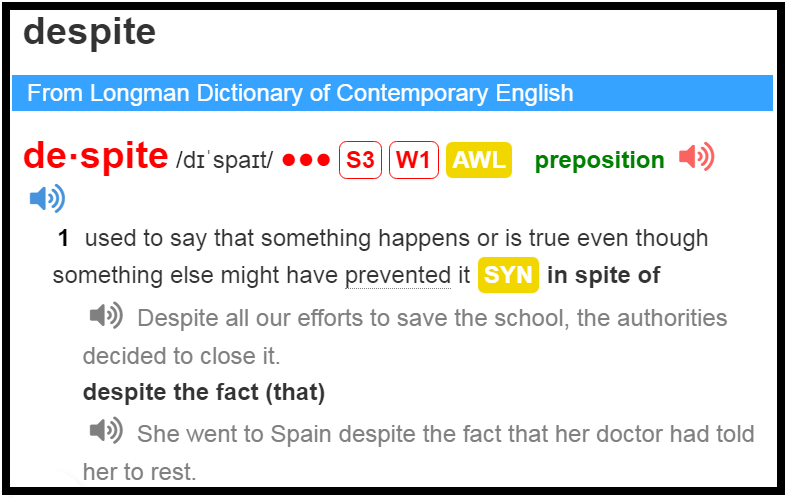
TÓPICO - PREPOSITION - DESPITE - APESAR DE :
➭ DESPITE (preposition) – APESAR DE. [www.linguee.com.br]

10 – (COSEAC-2016-PMN/RJ-PROFESSOR)
"_______, multicultural education is most
successful when implemented as a schoolwide
approach with reconstruction of not only curriculum,
but also organizational and institutional policy."
The
best expression to complete the excerpt is:
(A) However.
(B) But.
(C) Despite.
(D) Seldom.
(E) Thus.
(B) But.
(C) Despite.
(D) Seldom.
(E) Thus.
👍 Comentários e Gabarito E
TÓPICO - IDEIA CONTEXTUAL ou INFORMAÇÃO DENTRO DO TEXTO :
❑ TRADUÇÃO - TEXT 3:
Há muitas razões pelas quais levar os alunos a ler textos em inglês é uma parte importante do trabalho do professor. Em primeiro lugar, muitos deles querem ser capazes de ler textos em inglês, seja para as suas carreiras, para fins de estudo ou simplesmente por prazer. Tudo o que pudermos fazer para lhes facilitar a leitura deve ser uma boa ideia.
Reading is useful ___ other purposes too: any exposure to English, (provided students understand it more or less) is a good thing for language students. At the very least, some of the language sticks ___ their minds as part of the process ___ language acquisition, and, if the reading text is, especially interesting and engaging, acquisition is likely to be even more successful.
Reading texts also provide good model ____ English writing. When we teach the skill of writing, we will need to show students models _____ what we are encouraging them to do.
Reading texts also provide opportunities ______ study language vocabulary, grammar, punctuation, and the way We construct sentences, paragraphs and texts. Lastly, good reading texts can introduce interesting topics, stimulate discussion, excite imaginative responses and be the springboard ______ well-rounded, fascinating lessons.
Why teach reading?
Porquê ensinar a ler?
There are many reasons why getting students to
read English texts is an Important part of the
teacher‟s job. In the first place, many of them want
to be able to read texts in English either for their
careers, for study purposes or simply for pleasure.
Anything we can do to make reading easier for them
must be a good idea.Há muitas razões pelas quais levar os alunos a ler textos em inglês é uma parte importante do trabalho do professor. Em primeiro lugar, muitos deles querem ser capazes de ler textos em inglês, seja para as suas carreiras, para fins de estudo ou simplesmente por prazer. Tudo o que pudermos fazer para lhes facilitar a leitura deve ser uma boa ideia.
Reading is useful ___ other purposes too: any exposure to English, (provided students understand it more or less) is a good thing for language students. At the very least, some of the language sticks ___ their minds as part of the process ___ language acquisition, and, if the reading text is, especially interesting and engaging, acquisition is likely to be even more successful.
Reading texts also provide good model ____ English writing. When we teach the skill of writing, we will need to show students models _____ what we are encouraging them to do.
Reading texts also provide opportunities ______ study language vocabulary, grammar, punctuation, and the way We construct sentences, paragraphs and texts. Lastly, good reading texts can introduce interesting topics, stimulate discussion, excite imaginative responses and be the springboard ______ well-rounded, fascinating lessons.
Adapted from http://mozva.blogspot.com.br/2014/10/how-toteach-reading-by-jeremy-harmer.html
Accessed on 21 April 2016)
11 – (COSEAC-2016-PMN/RJ-PROFESSOR)
The best sequence of prepositions to fill in the
blanks is:
(A) for – on – of – of – of – to – at.
(B) to – in – on – in – of – for – to.
(C) for – in – of – for – of – to – for.
(D) to – on – on – of – in – for – at.
(E) for – on – in – for – of – to – at
(B) to – in – on – in – of – for – to.
(C) for – in – of – for – of – to – for.
(D) to – on – on – of – in – for – at.
(E) for – on – in – for – of – to – at
👍 Comentários e Gabarito C
TÓPICO - IDEIA CONTEXTUAL ou INFORMAÇÃO DENTRO DO TEXTO :
12 – (COSEAC-2016-PMN/RJ-PROFESSOR)
When teaching reading skills, teachers need
to teach different ways of reading a text.
The
instruction which is related to reading for gist is
represented by:
(A) Answer this question: how many brothers
does she have?
(B) Find out Jane‟s phone number in Kate‟s phone book.
(C) Read the label and identify the number of calories in the jam.
(D) Decide which is the best heading for the text.
(E) Tell your partner what time is the movie session.
(B) Find out Jane‟s phone number in Kate‟s phone book.
(C) Read the label and identify the number of calories in the jam.
(D) Decide which is the best heading for the text.
(E) Tell your partner what time is the movie session.
👍 Comentários e Gabarito D
TÓPICO - IDEIA CONTEXTUAL ou INFORMAÇÃO DENTRO DO TEXTO :
❑ TRADUÇÃO - TEXT 4:
(…) In describing methods, the difference between a
philosophy of language teaching at the level of
theory and principles, and a set of derived
procedures for teaching a language, is central. In an
attempt to clarify this difference, a scheme was
proposed by the American applied linguist Edward
Anthony in 1963. He identified three levels of
conceptualization and organization, ________ he
termed approach, method, and technique.
The arrangement is hierarchical. The organizational key is that techniques carry out a method which is consistent with an approach ...
A organização é hierárquica. A chave organizacional é que as técnicas executam um método que é consistente com uma abordagem ...
An approach is a set of correlative assumptions dealing with the nature of language teaching and learning. An approach is axiomatic. It describes the nature of the subject matter to be taught...
Uma abordagem é um conjunto de pressupostos correlativos que tratam da natureza do ensino e da aprendizagem de línguas. Uma abordagem é axiomática. Descreve a natureza da matéria a ser ensinada...
... Method is an overall plan for the orderly presentation of language material, no part of which contradicts, and all of which is based upon, the selected approach. An approach is axiomatic, a method is procedural. Within one approach, there can be many methods ...
... O método é um plano global para a apresentação ordenada de material linguístico, em que nenhuma parte contradiz a abordagem selecionada e em que toda ela se baseia. Uma abordagem é axiomática, um método é processual. Dentro de uma abordagem, pode haver muitos métodos ...
... A technique is implementational - that which actually takes place in a classroom. It is a particular trick, stratagem, or contrivance used to accomplish an immediate objective. Techniques must be consistent with a method, and therefore in harmony with an approach as well.
(Anthony 1963:63-7)
13 – (COSEAC-2016-PMN/RJ-PROFESSOR) In accordance with the descriptions of
approach, method and technique, the alternative
that presents two techniques is:
The arrangement is hierarchical. The organizational key is that techniques carry out a method which is consistent with an approach ...
A organização é hierárquica. A chave organizacional é que as técnicas executam um método que é consistente com uma abordagem ...
An approach is a set of correlative assumptions dealing with the nature of language teaching and learning. An approach is axiomatic. It describes the nature of the subject matter to be taught...
Uma abordagem é um conjunto de pressupostos correlativos que tratam da natureza do ensino e da aprendizagem de línguas. Uma abordagem é axiomática. Descreve a natureza da matéria a ser ensinada...
... Method is an overall plan for the orderly presentation of language material, no part of which contradicts, and all of which is based upon, the selected approach. An approach is axiomatic, a method is procedural. Within one approach, there can be many methods ...
... O método é um plano global para a apresentação ordenada de material linguístico, em que nenhuma parte contradiz a abordagem selecionada e em que toda ela se baseia. Uma abordagem é axiomática, um método é processual. Dentro de uma abordagem, pode haver muitos métodos ...
... A technique is implementational - that which actually takes place in a classroom. It is a particular trick, stratagem, or contrivance used to accomplish an immediate objective. Techniques must be consistent with a method, and therefore in harmony with an approach as well.
(Anthony 1963:63-7)
... Uma técnica é implementacional - aquilo que realmente acontece numa sala de aula. É um truque, estratagema ou artifício específico utilizado para atingir um objetivo imediato. As técnicas devem ser coerentes com um método e, por conseguinte, estar também em harmonia com uma abordagem. (Anthony 1963:63-7)
According to Anthony's model, approach is the level
at which assumptions and beliefs about language
and language learning are specified; method is the
level at ________ theory is put into practice and at
_____ choices are made about the particular skills
to be taught, the content to be taught, and the order
in ______ the content will be presented; technique
is the level at _____ classroom procedures are
described.
(RICHARDS, J; ROGERS, T; SWAN, M. (1999) Approaches and
Methods in Language Teaching. Cambridge: CUP. 15th edition)
(A) drilling and eliciting.
(B) drilling and writing.
(C) drilling and reading.
(D) eliciting and writing.
(E) eliciting and reading.
(B) drilling and writing.
(C) drilling and reading.
(D) eliciting and writing.
(E) eliciting and reading.
👍 Comentários e Gabarito A
TÓPICO - IDEIA CONTEXTUAL ou INFORMAÇÃO DENTRO DO TEXTO :
14 – (COSEAC-2016-PMN/RJ-PROFESSOR) Observe the fragments below:
"He identified three levels of conceptualization and
organization, _____ he termed approach,
method, and technique."
"…method is the level at _____ theory is put into
practice and at _____ choices are made about the
particular skills to be taught, the content to be
taught, and the order in ______ the content will be
presented; technique is the level at _____
classroom procedures are described."
The best sequence to fill in the blanks in the
following sentences is:
(A) that – that – which – that – which.
(B) that – that – that – that – that.
(C) which – that – which – that – that.
(D) which – which – which – which - which.
(E) which – that – that – that – which.
(B) that – that – that – that – that.
(C) which – that – which – that – that.
(D) which – which – which – which - which.
(E) which – that – that – that – which.
👍 Comentários e Gabarito C
TÓPICO - IDEIA CONTEXTUAL ou INFORMAÇÃO DENTRO DO TEXTO :
15 – (COSEAC-2016-PMN/RJ-PROFESSOR) In the sentence
"…choices are made about
the particular skills to be taught…",
the verbs are in the:
the verbs are in the:
(A) Present Perfect and Present Perfect.
(B) Present Simple and Present Simple.
(C) Present Simple Passive and Past Simple.
(D) Present Simple and Past Simple Passive.
(E) Present Simple Passive and Passive Infinitive.
(B) Present Simple and Present Simple.
(C) Present Simple Passive and Past Simple.
(D) Present Simple and Past Simple Passive.
(E) Present Simple Passive and Passive Infinitive.
👍 Comentários e Gabarito E
TÓPICO - IDEIA CONTEXTUAL ou INFORMAÇÃO DENTRO DO TEXTO :
16 – (COSEAC-2016-PMN/RJ-PROFESSOR)
elf,
campus, ox, series, analysis, echo:
(A) elfs, pennies, oxen, series, analyses, echos.
(B) elfs, pennies, oxen, series, analysis, echoes.
(C) elves, pence, oxies, series, analysis, echoes.
(D) elves, pence, oxen, series, analyses, echoes.
(E) elves, pence, oxies, series, analysis, echos.
(B) elfs, pennies, oxen, series, analysis, echoes.
(C) elves, pence, oxies, series, analysis, echoes.
(D) elves, pence, oxen, series, analyses, echoes.
(E) elves, pence, oxies, series, analysis, echos.
👍 Comentários e Gabarito X
TÓPICO - IDEIA CONTEXTUAL ou INFORMAÇÃO DENTRO DO TEXTO :
17 – (COSEAC-2016-PMN/RJ-PROFESSOR) Choose the alternative which has the translation of the false cognates
- “sensible”, “enroll”, “adept”, “uneducated”
to Portuguese:
(A) sensato, matricular, perito, sem instrução.
(B) sensato, enrolar, adepto, mal-educado.
(C) sensível, enrolar, perito, sem instrução.
(D) sensível, matricular, adepto, mal-educado.
(E) sensato, enrolar, perito, sem instrução.
(B) sensato, enrolar, adepto, mal-educado.
(C) sensível, enrolar, perito, sem instrução.
(D) sensível, matricular, adepto, mal-educado.
(E) sensato, enrolar, perito, sem instrução.
👍 Comentários e Gabarito A
TÓPICO - FALSE COGNATES :
➭ SENSIBLE – SENSATA. RACIONAL, PRÁTICA, MOSTRA BOM SENSO.
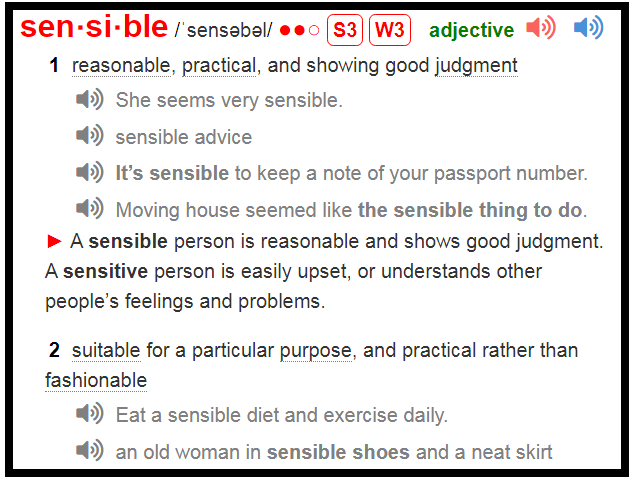
➭ ENROLL (US) or ENROL (UK) – INSCREVER, MATRICULAR.

➭ ADEPT – HABILIDOSO, ESPECIALISTA, PERITO.

➭ UNEDUCATED – SEM INSTRUÇÃO, COM POUCA OU NENHUMA INSTRUÇÃO.

18 – (COSEAC-2016-PMN/RJ-PROFESSOR)
Read the fragment from the news below:
a. "Donald Trump will change Republican party rules
to make the nomination process more uniform if
he becomes the GOP presidential candidate..."
The
Guardian (Extracted from http://www.theguardian.com/usnews/2016/apr/
21/trump-to-change-nomination-rules-if-he-
becomes-gop-nominee-ben-carson-says
Accessed on 23 April
2016)
b. "Izzi Seccombe, the LGA's community wellbeing
spokeswoman, said: "We want restaurant owners to
play their part in tackling childhood obesity by
offering families tap water"."
The Guardian (Extracted
from http://www.theguardian.com/society/
2016/apr/23/restaurants-told-
to-give-all-families-tap-water-to-fight-childhood-obesity
Accessed on 23 April 2016)
c. "During the trial, the jury asked to be shown round
the "House of Horrors" – for once the cliche seemed
appropriate – where the Wests had carried out most
of their killings. The judge, Mr Justice Mantell, said
that a journalist could accompany them, and mine
was the name picked out of the hat."
The Guardian
(Extracted from
http://www.theguardian.com/uk-news/2016/
apr/23/duncan-campbell-cops-robbers-and-me
Accessed on 23
April 2016)
d. "If we had been sophisticated and calculating we
never would have started."
The Guardian (Extracted
from http://www.theguardian.com/stage/2016/
apr/23/cloud-gatetaiwan-dance-song
-wanderers Accessed on 23 April 2016)
(A) mixed conditional, direct speech, direct
speech, third conditional.
(B) first conditional, direct speech, indirect speech, third conditional.
(C) first conditional, indirect speech, indirect speech, second conditional.
(D) mixed conditional, indirect speech, indirect speech, third conditional.
(E) mixed conditional, indirect speech, direct speech, third conditional.
(B) first conditional, direct speech, indirect speech, third conditional.
(C) first conditional, indirect speech, indirect speech, second conditional.
(D) mixed conditional, indirect speech, indirect speech, third conditional.
(E) mixed conditional, indirect speech, direct speech, third conditional.
👍 Comentários e Gabarito B
TÓPICO - IDEIA CONTEXTUAL ou INFORMAÇÃO DENTRO DO TEXTO :
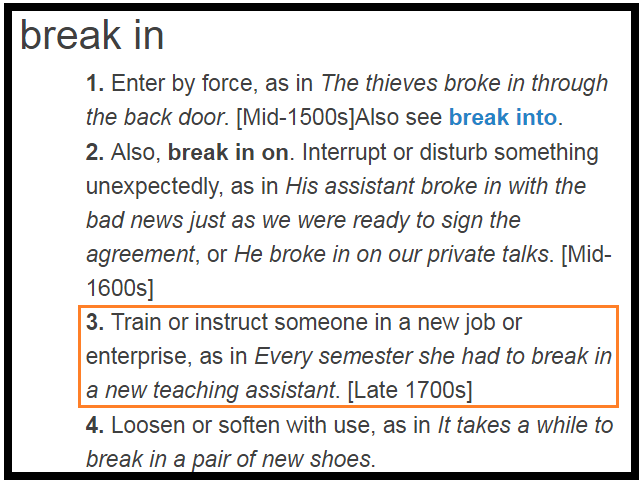
19 – (COSEAC-2016-PMN/RJ-PROFESSOR) Choose the correct sequence of the synonyms of the following phrasal verbs:
- turn up, bring off, keep on, put off, break in:
(A) to arrive, to produce, to continue, to grow, to
destroy.
(B) to equip, to accomplish, to control, to postpone, to destroy.
(C) to equip, to produce, to continue, to grow, to instruct.
(D) to arrive, to accomplish, to control, to postpone, to destroy.
(E) to arrive, to accomplish, to continue, to postpone, to instruct.
(B) to equip, to accomplish, to control, to postpone, to destroy.
(C) to equip, to produce, to continue, to grow, to instruct.
(D) to arrive, to accomplish, to control, to postpone, to destroy.
(E) to arrive, to accomplish, to continue, to postpone, to instruct.
👍 Comentários e Gabarito E
TÓPICO - PHRASAL VERBS :
➭ TO TURN UP – TO BE FOUND or TO ARRIVE or TO HAPPEN.
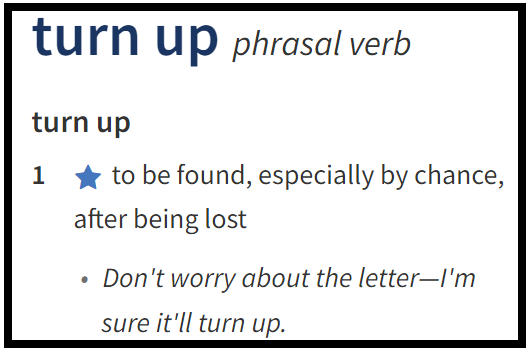


➭ TO BRING OFF – TO SUCCEED (CONSEGUIR, TER SUCESSO, OBTER ÊXITO), TO ACCOMPLISH (CONQUISTAR, REALIZAR).


➭ TO KEEP ON – TO CONTINUE.

➭ TO PUT OFF – TO POSTPONE, TO DELAY.

❑ TRADUÇÃO - TEXT 5:
"In discussing tense, we concentrated on location of a situation. In order to talk about ASPECT, we have to look inside the situation. In terms of its internal dimensions, a situation may be represented as fixed or changing, it may be treated as lasting for only a moment or having duration, and it can be viewed as completed or as ongoing. These are aspectual distinctions.
"Ao discutirmos o tempo verbal, concentrámo-nos na localização de uma situação. Para falarmos de ASPECTO, temos de olhar para o interior da situação. Em termos das suas dimensões internas, uma situação pode ser representada como fixa ou em mudança, pode ser tratada como durando apenas um momento ou tendo duração, e pode ser vista como concluída ou em curso. Estas são distinções aspectuais.
Because aspect has to do with the kind of situation perceived or experienced, it can be expressed both lexically and grammatically.”
"In discussing tense, we concentrated on location of a situation. In order to talk about ASPECT, we have to look inside the situation. In terms of its internal dimensions, a situation may be represented as fixed or changing, it may be treated as lasting for only a moment or having duration, and it can be viewed as completed or as ongoing. These are aspectual distinctions.
"Ao discutirmos o tempo verbal, concentrámo-nos na localização de uma situação. Para falarmos de ASPECTO, temos de olhar para o interior da situação. Em termos das suas dimensões internas, uma situação pode ser representada como fixa ou em mudança, pode ser tratada como durando apenas um momento ou tendo duração, e pode ser vista como concluída ou em curso. Estas são distinções aspectuais.
Because aspect has to do with the kind of situation perceived or experienced, it can be expressed both lexically and grammatically.”
Como o aspeto tem a ver com o tipo de situação percebida ou vivida, pode ser expresso tanto lexicalmente como gramaticalmente".
(YULE, 2000;62)
20 – (COSEAC-2016-PMN/RJ-PROFESSOR)
According to YULE (2000), when we are
discussing tense, we need to look at the location of
a given situation. However, when the issue is
aspect, we need to look inside the situation itself.
Taking into consideration both the lexical and
grammatical aspects of the verb, the sentence that
describes that at this time I look back at myself in an
activity viewed internally as in progress is:
(A) I have done the homework.
(B) I had moved to London.
(C) I have been cooking.
(D) I had been watching TV.
(E) I had owned the old car.
(B) I had moved to London.
(C) I have been cooking.
(D) I had been watching TV.
(E) I had owned the old car.
👍 Comentários e Gabarito C
TÓPICO - IDEIA CONTEXTUAL ou INFORMAÇÃO DENTRO DO TEXTO :
According to YULE (2000), when we are discussing tense, we need to look at the location of a given situation. However, when the issue is aspect, we need to look inside the situation itself.
De acordo com YULE (2000), quando estamos discutindo tempo verbal, precisamos olhar para a localização de uma determinada situação. Porém, quando a questão é aspecto, precisamos olhar para dentro da própria situação.
Taking into consideration both the lexical and grammatical aspects of the verb, the sentence that describes that at this time I look back at myself in an activity viewed internally as in progress is:
Levando em consideração tanto os aspectos lexicais como gramaticais do verbo, a frase que descreve que neste momento eu olho para mim mesmo em uma atividade vista internamente como em andamento é:
(A) I have done the homework. – Fiz os trabalhos de casa.
(B) I had moved to London. – Mudei-me para Londres.
(C) I have been cooking. – Estive cozinhando.
(D) I had been watching TV. – Eu estava assistindo TV.
(E) I had owned the old car. – Eu tinha o carro velho.
(B) I had moved to London. – Mudei-me para Londres.
(C) I have been cooking. – Estive cozinhando.
(D) I had been watching TV. – Eu estava assistindo TV.
(E) I had owned the old car. – Eu tinha o carro velho.
Comentários
Postar um comentário